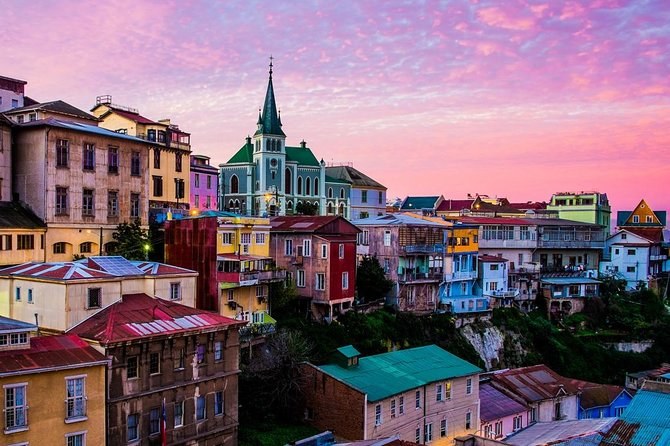
Famous Valparaíso! Premium Walking Tour with a Native Guide
Three hours on foot through the UNESCO quarter, both funicular tickets in the fare.
From $40 per person
Check AvailabilityThere is no ticket to Valparaiso. The city has no gate, no admission and no closing time, so the money goes on a guided day, a funicular, a museum and lunch. Here is what each one costs, when things open and how long to allow, with Valparaiso ticket prices set out side by side.
Valparaiso is a working port city of about 285,000 people, not a monument with a turnstile. UNESCO inscribed its historic quarter in 2003, but what was inscribed is the layout of the hills, the public spaces, the port and the funicular and trolleybus systems — all of it ordinary city, open at every hour and free to walk.
So the question behind "Valparaiso ticket prices" is really a different one: what does a day here actually cost? Four things do. A guided tour, a ride on an ascensor, a museum, and whatever you eat.
These are the figures published by the operators and the museums themselves, in the currency each one uses. Tour fares are per person unless the card says otherwise.
| What | Price | Notes |
|---|---|---|
| A guided walking tour | $40 – $80 per person | Three to seven hours; the funicular and trolleybus tickets are inside the fare on all three |
| A day trip from Santiago | $56 – $72 per person | About ten hours door to door, with hotel pickup, Viña del Mar and a Casablanca tasting |
| A Casablanca wine day | $89 – $273 per person | Five to eight hours; every tasting fee is inside the fare |
| A private tour | $259 – $289 per person | Your own vehicle and guide; two of the three are timed to a ship |
| La Sebastiana | CLP 11,000 | CLP 4,500 for students under 17, accredited students in Chile and residents over 60 |
| Palacio Baburizza | CLP 4,000 | CLP 6,000 for foreign visitors, CLP 1,500 for students and over-65s, free under 12 |
| An ascensor | A few hundred pesos | Municipal and cash-only; several tours cover the ride in the fare |
The cheapest guided day we list is From $40 and the most expensive is From $289, which buys a private van, a guide, a driver and a run to the Santiago airport with the luggage aboard. Lunch sits outside almost every fare, so add it.
Every fare is set out with its length, its group size and what it covers, and all but one refund in full up to 24 hours ahead.
The city never closes. The two house museums do: La Sebastiana and Palacio Baburizza both run Tuesday to Sunday, 10am to 6pm, and shut on Mondays. La Sebastiana stays open to 7pm in January and February.
The funiculars keep long hours — El Peral, Reina Victoria and Barón run from 7am to 9:30pm, San Agustín to 9pm. Six of them are working at the moment, which is why a guide who knows this week's list is worth more here than a map.
Three hours buys the UNESCO quarter with a guide: Plaza Sotomayor, a lift up, an hour on each of the two famous cerros and a lift back down. That is what a shore call or a day trip from Santiago usually leaves you.
A full day adds the markets, Barrio Puerto, the fish pier at Caleta Portales and Viña del Mar along the bay. Two days is when the city stops being a viewpoint, because the coaches all leave by late afternoon and the paseos empty out.
Four different places, and none of them is a front door. The Santiago day trips collect from hotels and Airbnbs in the capital. The walking tours meet at Plaza Sotomayor or at Muelle Prat, both a few minutes from the passenger terminal. The cruise-timed days collect at the terminal gate itself, and one coastal day picks up from hotels in Valparaiso or Viña del Mar.
Your meeting point matters more than your hotel. Each card names its own, and the getting there page lists every one with the route to it.
The city is built in an amphitheatre, and the flat part is a narrow strip along the water. Everything else climbs. The paseos themselves are level once you are up there; it is getting up that is the work, and it is precisely why fifteen funiculars were declared national monuments in 1998.
Wear shoes with grip. The cobbles are worn smooth in places and the stairways are steep. If stairs are a problem, the panoramic tour is built around riding the lifts rather than climbing between them, and its operator describes it as wheelchair accessible.
The quarter the tours use — Plaza Sotomayor, the paseos, Cerro Alegre, Cerro Concepción — is busy and easy to walk in daylight. Keep a phone or a camera out of sight on the stairways between hills, where the street empties quickly.
After dark, take a taxi or a rideshare back rather than walking down through the cerros. A local guide knows which turning to skip and which alley is fine, and that knowledge is the quiet argument for booking the first morning rather than the last.
A windproof layer whatever the forecast says: the sea breeze gets up in the afternoon and the top of a cerro is not the temperature of the port. Sun protection in summer, because the paseos have almost no shade.
Carry cash in pesos for the lifts, the markets and tips, and a card for everything else. If you are off a ship, bring the ship's own all-aboard time written down and give the guide a copy.
Rain, not heat. The city's own weather station records under 6 mm in each of November to March and about 162 mm in June, spread over six wet days, and a wet stairway changes a walking day more than a cold one does. Afternoon highs run between 15°C in midwinter and 23°C in January.
If your dates fall in the wet half of the year, a wine day or a private car is the weatherproof booking, and the month-by-month page sets out what each one looks like.
Three hours on foot through the UNESCO quarter, both funicular tickets in the fare.
From $40 per person
Check Availability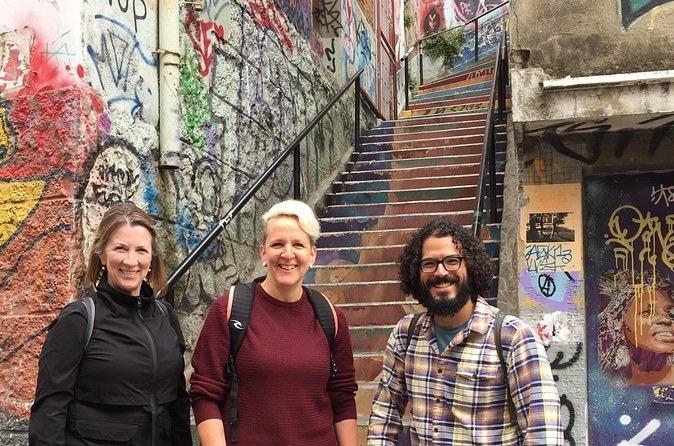
The lifts rather than the stairs: three and a half hours, and step-free by its operator.
From $40 per person
Check Availability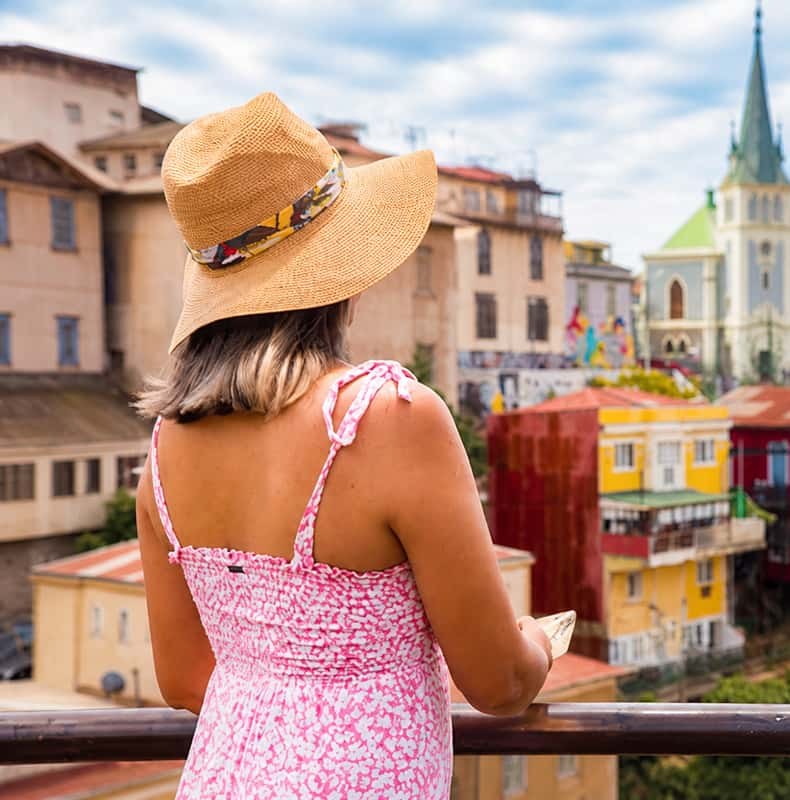
A small-group day from Santiago with a funicular ride and a Casablanca tasting included.
From $60 per person
Check AvailabilityEvery fare is set side by side on Valparaiso Tours. For which hill to spend your time on, read the neighborhoods; for the lifts, the murals and the markets, things to do; and for anything left over, the FAQs.