Seeing Valparaiso Without a Tour: What You Can Do Alone, Honestly
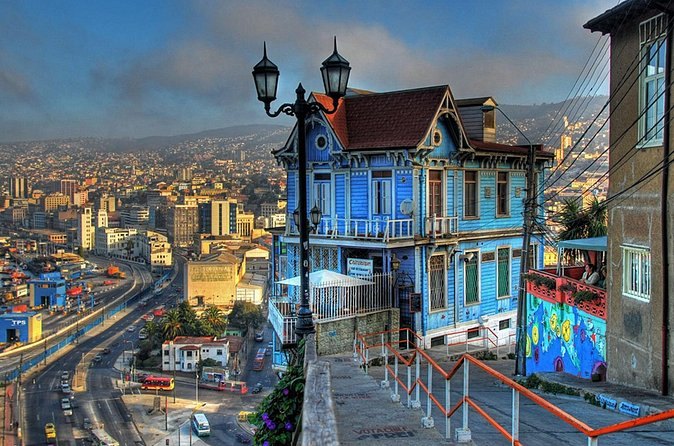
The short version. You can see a great deal of Valparaiso alone and for very little. There is no admission to the city, the funiculars cost a few hundred pesos, the metro runs along the bay and the murals are free. What a guide buys is four specific things: the route through an unmarked staircase grid, the stories behind the walls, which lifts are working this week, and which turning to skip. Whether that is worth $40 is a real question, and the answer depends on how long you have.
In this guide
- What can you do here for nothing?
- What actually costs money?
- How do you get around on your own?
- What is genuinely hard without a guide?
- Is Valparaiso safe to walk alone?
- What does a guide actually buy you?
- Can you do the wine country alone?
- What about doing it from Santiago without a tour?
- What is the cheapest good day here?
- Who should definitely book a guide?
- What is the one thing people regret doing alone?
- Who should skip it?
- Frequently asked questions
A tours site saying you might not need a tour looks odd until you notice how much of this city is simply public. The honest position is that half the visitors here should walk it alone and half should not, and the difference is not budget. Below is what costs nothing, what is genuinely hard alone, and where the line falls. Every guided option is compared with city tour valparaiso chile.
What can you do here for nothing?
Most of it. The historic quarter UNESCO inscribed in 2003 is streets, squares and promenades: Plaza Sotomayor, the paseos on both famous cerros, Muelle Prat, the whole Museo a Cielo Abierto on Cerro Bellavista, the murals on every stairway, and the fish pier at Caleta Portales with its sea lions.
None of that has a gate, a ticket or an opening time. You walk into it the way you walk into any city, which is why the search for a Valparaiso ticket price turns up nothing.
What actually costs money?
| What | Price | Could you skip it? |
|---|---|---|
| An ascensor ride | A few hundred pesos, cash | Yes, if you will climb the stairs instead |
| La Sebastiana | CLP 11,000, or CLP 4,500 reduced | Yes, but it is the one interior worth the money |
| Palacio Baburizza | CLP 4,000, CLP 6,000 for foreign visitors | Yes; the promenade outside it is free |
| The metro along the bay | A local fare | No, if you want Caleta Portales or Viña del Mar |
| A harbour launch | Set at the pier | Yes, but it is the one view the streets cannot give |
| A guided walk | From $40 | That is the question this guide is about |
We do not print a peso figure for the lifts. Two registers publish one and the municipality that owns them publishes none, and a fare we cannot source is a fare we will not quote. Carry small notes and you will be fine.
How do you get around on your own?
Three systems, and all three are part of the World Heritage listing rather than incidental to it. The metro runs from Puerto station along the bay through Viña del Mar to Limache. The trolleybuses work the flat streets. The ascensores climb between the port and the hills.
Add taxis and the shared colectivo cars and nothing in the historic quarter is far. The practical catch is that the lifts take cash, the buses take cash, and neither announces itself in English. Getting there sets out the routes.
What is genuinely hard without a guide?
Navigation, first. Above sea level this city is more than forty hills of unmarked staircases, passages that end at a front door and streets that change name at a corner. Visitors regularly describe arriving, looking up and having no idea where to begin.
Second, knowing what you are looking at. The murals are unsigned and half of them are a month old. Third, knowing which lifts are running, which changes. Fourth, knowing which stairway empties out and should be walked in daylight only.
The compromise most people land on. One guided walk early in the stay, then the rest alone with a map that finally makes sense. The guided Valparaiso tours start at $40.
Is Valparaiso safe to walk alone?
In the busy quarter in daylight, yes, and that is where nearly everything worth seeing is. The consistent local advice is the ordinary port-city advice: keep a phone and a camera out of sight on the stairways between hills, do not wander into empty streets, and take a taxi back after dark rather than walking down through the cerros.
A guide does not make the city safer in any general sense. What a guide does is know the specific turning, which is worth most on your first morning and least on your fourth day.
What does a guide actually buy you?
- A route that uses the lifts instead of the staircases, in the order the hills dictate.
- The stories behind the walls, the immigrant families and the port, which are not written anywhere on the buildings.
- This week's list of working ascensores, rather than last year's.
- The transport tickets, on several of the walks here, which removes the cash-and-Spanish problem entirely.
- Local judgement about which streets to keep to, which nobody writes down.
At $40 for three hours that is a reasonable trade on a first visit. On a fifth day in the city it obviously is not, and nobody should pretend otherwise.
Can you do the wine country alone?
You can drive it, and people do. What you cannot do is drive it and drink, which is most of the point, and the Casablanca Valley is forty-five minutes inland with no useful public transport between the bodegas.
That makes the wine day the one category where the guided version is not a convenience but the only sensible option. The wine tours page covers what each one includes; every tasting fee is inside the fare.
What about doing it from Santiago without a tour?
Straightforward. Coaches run all day from Terminal Alameda and Terminal Pajaritos to the Terminal Rodoviario on Avenida Pedro Montt, about an hour and a half on Ruta 68. Fares move by operator and nobody publishes a fixed one, so buy at the terminal.
Coach plus a three-hour walk on arrival costs less than a day trip and gives you more hours in the city, because you are not spending three of them in a van with a fixed return. The trade is that you arrange it yourself and you carry your own risk on the timing.
What is the cheapest good day here?
Metro to Caleta Portales at eight for the boats and the sea lions, the Mercado El Cardonal mid-morning for an early lunch upstairs, a walk to Plaza Sotomayor, one funicular up, and the whole afternoon on the paseos of both famous cerros. That is a full day for a few transport fares and a plate of food.
Add the harbour launch from Muelle Prat and one museum and you are still under what a single guided day costs. Nothing about that itinerary is hidden or difficult once somebody has told you the order, which is precisely what this guide is for.
Who should definitely book a guide?
- Anyone here for one day, where being lost for an hour costs a third of the visit.
- Cruise passengers, because an all-aboard time and an unfamiliar hill grid are a bad combination.
- Anyone who wants the wine country, for the driving reason above.
- Anyone with mobility limits, because the one listing that rides rather than climbs is a guided one.
What is the one thing people regret doing alone?
The first two hours. Almost every account of a first morning here describes the same shape: arriving at the port, looking up at a wall of staircases, and losing an hour finding a way into the city that a local would have walked in five minutes.
That is an hour out of a three-hour shore call, or a third of a single free morning. It is also the cheapest hour to buy back, which is the whole argument for booking a short guided walk at the start of a stay rather than the end of one.
Who should skip it?
If you have three or four days, are comfortable in Spanish or comfortable being lost, and you like finding things yourself, walk it. Take the metro to Caleta Portales one morning, ride a lift, and let the staircases take you wherever they go. It is a wonderful city to be lost in during daylight, which is not true of every port.
Book one thing, though, even then: the harbour launch from Muelle Prat. Nobody finds it on their own and it gives the view the whole city was built to be seen from. Things to do explains where to look.
Frequently asked questions
Do I need a tour to see Valparaiso?
Is it safe to walk around Valparaiso alone?
How much does it cost to visit Valparaiso independently?
Can I get from Santiago to Valparaiso without a tour?
Which funiculars can I ride on my own?
Is the wine country doable without a tour?
Doing most of it alone? The three days below are the ones worth buying anyway, and the cheapest is first. Every other fare is compared on Valparaiso Tours.
Worth buying even if you walk the rest
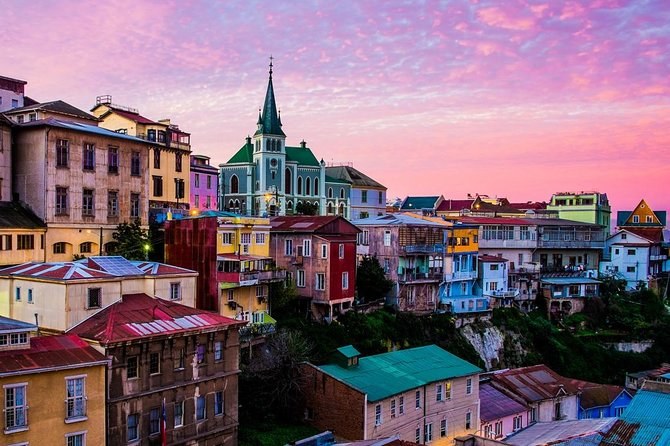
Famous Valparaíso! Premium Walking Tour with a Native Guide
Three hours on foot through the UNESCO quarter, both funicular tickets in the fare.
From $40 per person
Check Availability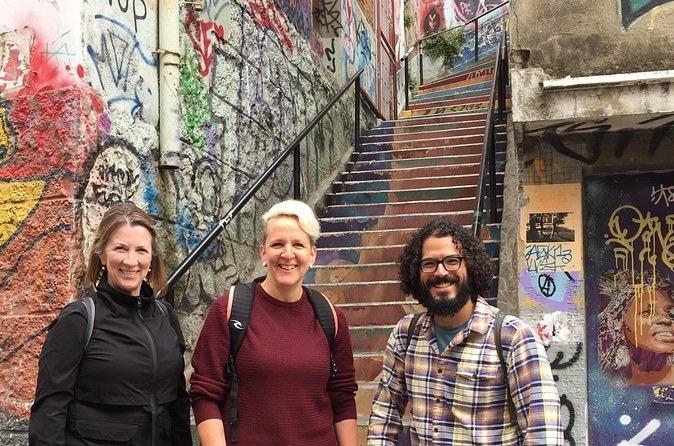
Guided Panoramic Tour in Valparaíso
The lifts rather than the stairs: three and a half hours, and step-free by its operator.
From $40 per person
Check Availability
Taste 10 Types of Wine in 3 exclusive Casablanca’s Vineyard
Three Casablanca bodegas in an afternoon, with hotel pickup and a cap of six.
From $250 per person (min. 2)
Check Availability