Valparaiso Cerro by Cerro: Every Hill Worth Climbing
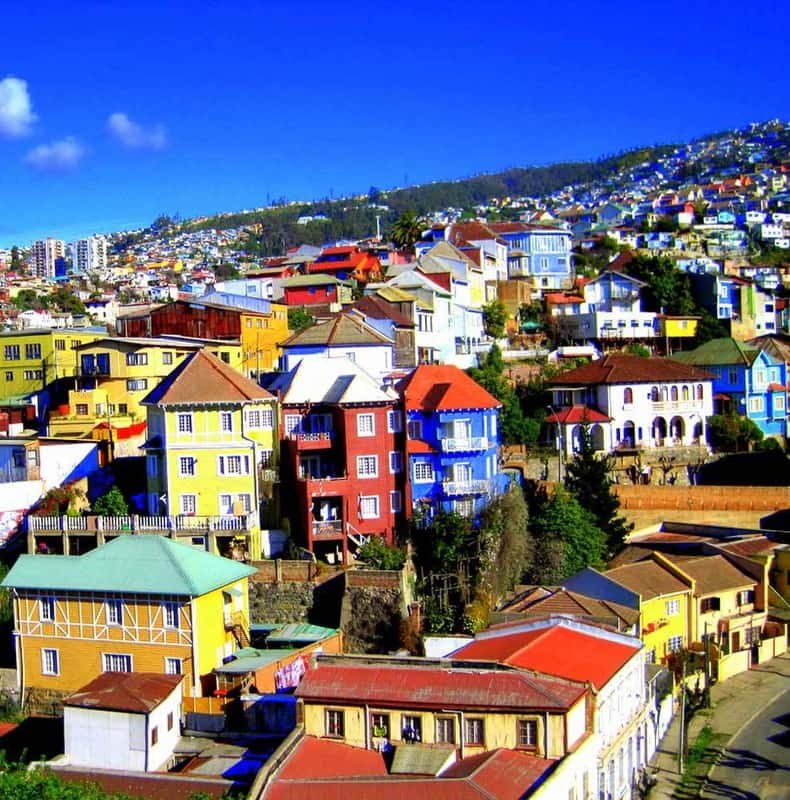
The short answer. Cerro Alegre and Cerro Concepción are the two you came for, and they run into each other across one footbridge, so a single afternoon covers both. Add Cerro Bellavista for the open-air museum and Neruda's house, Barrio Puerto at sea level for the port, and Cerro Artillería for the best sunset view. The funiculars do the climbing; walking up is a choice, not a requirement.
Valparaiso has more than forty named hills and no logic to which one holds what. Guidebooks list them alphabetically, which is no help at all when you are standing at Plaza Sotomayor with four hours and a pair of shoes. This is the same list ordered by what you actually want, with the lift that reaches each one. To see which guided routes cover which hills, compare Valparaiso guided tours.
Which two hills do most visitors walk?
Cerro Alegre and Cerro Concepción, without much competition. They sit side by side above the port, joined by a footbridge, and between them they hold the promenades, the galleries, the restaurants, the small hotels and most of the murals that end up in photographs.
Concepción is the older story: the first ascensor in the city opened here on 1 December 1883, and the merchant families who built the houses behind Paseo Gervasoni and Paseo Atkinson were British, German and Croatian. Alegre is the one with Paseo Yugoslavo running along its edge and Palacio Baburizza on it.
How do you get up without climbing?
You take a lift, which is what they were built for. Fifteen ascensores were declared national monuments on 1 September 1998, and six are running now.
| Hill | The lift | Built | What is at the top |
|---|---|---|---|
| Cerro Alegre | Ascensor El Peral | 1902 | Paseo Yugoslavo, Palacio Baburizza, the galleries |
| Cerro Concepción | Ascensor Reina Victoria | 1902 | Paseo Gervasoni, Paseo Atkinson, the Lutheran tower |
| Cerro Artillería | Ascensor Artillería | 1892 | Paseo 21 de Mayo and the naval museum |
| Cerro Cordillera | Ascensor Cordillera | 1894 | The oldest quarter above Barrio Puerto |
| Cerro Polanco | Ascensor Polanco | 1913–15 | A mural festival and the only vertical lift |
| Cerro Barón | Ascensor Barón | — | The eastern end of the bay, above the terminal |
El Peral, Reina Victoria and Barón run 7am to 9:30pm; San Agustín closes at 9pm. Several of the guided walks include two rides in the fare, which removes the one part of the day that needs coins.
Where is the street art?
Everywhere, and in two different forms. The murals on the stairways of Alegre and Concepción change month by month and are painted by whoever is working; the Museo a Cielo Abierto on Cerro Bellavista is the planned version, a set route of works by named Chilean artists set into the walls and steps.
Bellavista is also where La Sebastiana stands, Neruda's Valparaiso house at Ferrari 692. Between the museum route and the house, that hill is a ninety-minute walk plus an hour indoors.
Do Alegre and Concepción as one visit. They share a footbridge, so treating them as separate outings wastes a descent and a climb. A guided Valparaiso walking tour sequences them properly.
What is down at sea level?
Barrio Puerto, and it is not pretty in the way the hills are. Plaza Sotomayor with its monument to the heroes of Iquique, the naval command building, Muelle Prat where the harbour launches leave, Iglesia La Matriz a few streets inland. It is a working quarter and it is where almost every walking tour begins.
East along the flat runs El Almendral, where the National Congress sits and the Mercado El Cardonal trades. Neither is on a postcard, and both are on the seven-hour walking day, which is the point of that tour.
Which hill has the best view?
Cerro Artillería, at the western end above the port mouth. Paseo 21 de Mayo runs along the top with the Museo Naval y Marítimo behind it, and the whole container terminal and bay lie below. Ascensor Artillería, built in 1892 as the third lift in the city, takes you up from Plaza Aduana.
Playa Ancha, the broad hill beyond it, gives the wider version of the same view and is where you understand the amphitheatre shape. Few tours climb it, which is part of why it is worth your own hour.
Which hills are steep, honestly?
- Alegre and Concepción: steep to reach, level once you are up. Take the lift.
- Bellavista: a real climb from Avenida Argentina, and the open-air museum is itself a staircase.
- Artillería: steep, but the lift lands you on the promenade.
- Polanco: the lift is vertical inside a shaft, so the climb is entirely solved.
- Playa Ancha: long rather than steep, and better by trolleybus or taxi.
Reviewers on the seven-hour walking day describe about three and a half miles on foot and a good deal of stairs. If that is too much, the panoramic tour is built the other way round: ride up, walk along, ride down. The visiting page covers what to wear.
What is the most-missed hill?
Cerro Cordillera, immediately above Barrio Puerto, and the reason it is missed is that its lift is easy to walk past. It was built in 1894, first inaugurated in 1886 and rebuilt after a fire, and it lands you in the oldest inhabited quarter of the city, which has almost no galleries and almost no tourists.
It rewards half an hour if you have already done Alegre and Concepción and want to see what the same architecture looks like when nobody has restored it for a guidebook. Ask your guide whether it is running before you plan around it.
How do the hills connect to each other?
Badly, and that is the thing a map cannot show you. Two hills that look adjacent are often separated by a ravine with no crossing, so getting from one to the next means descending to sea level and climbing again. Alegre and Concepción are the exception, joined directly by a footbridge.
The practical consequence is that you should plan a visit as a small number of hills done properly rather than a circuit of five. That is exactly how the guided walks are built, and it is why they take the lifts they take. Getting there covers the trolleybuses and the metro that link the flat ground between them.
Which hill should you stay on?
Alegre or Concepción if you want to walk out of the door into the paseos and back in after dinner. Both are small, both are served by a funicular, and both are where the restaurants are.
If you want quiet and a view rather than the centre, Cerro Bellavista and Cerro Artillería both work, at the cost of a taxi at night. Whatever you choose, ask the hotel which lift serves it and whether that lift is running this month.
Want somebody who knows the staircases? The three below walk these hills at three different speeds, from three hours to a full day; the rest are compared on Valparaiso Tours.
Ways to walk the cerros
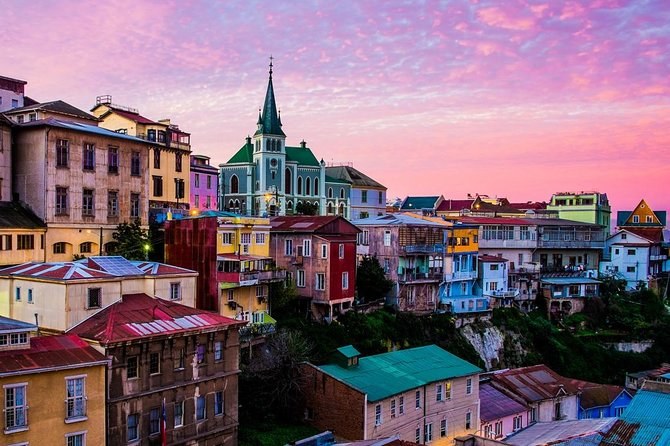
Famous Valparaíso! Premium Walking Tour with a Native Guide
Three hours on foot through the UNESCO quarter, both funicular tickets in the fare.
From $40 per person
Check Availability
Valpo in 1 day: Authentic + Famous! Semi-private walking tour & public transport
Seven hours on trains, trolleybuses and funiculars, through the markets and over both cerros.
From $80 per person
Check Availability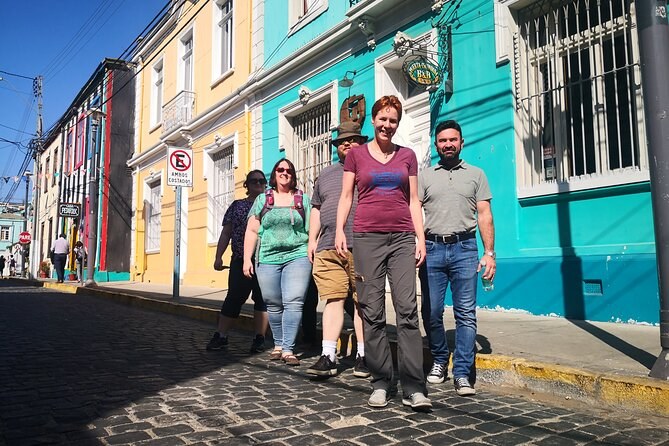
Private tour in Valparaiso from Valparaiso CruiseTerminal to Stgo
A private guide-driver from the cruise terminal to Santiago, two and a half hours in the city.
From $284 per person
Check Availability