Valparaiso Day Trip or Overnight? An Honest Comparison

The short answer. A day trip from Santiago runs about ten hours door to door and gives you roughly three of them in Valparaiso itself. That is enough for the UNESCO quarter and not much else. Staying the night buys two things the day trip cannot: the late afternoon light on the painted hills, and the city after the vans have gone. If the coast is a box to tick, take the day trip. If Valparaiso is the reason you came, stay.
This is the decision almost every visitor to Chile makes, usually in a hurry, and the marketing is no help because both options are sold by the same operators. Here is the honest arithmetic. To compare the actual fares on both sides of it, see valparaiso chile tours.
What does a day trip actually give you?
Ten hours, of which about three are in Valparaiso. The rest is the road — an hour and a half each way on Ruta 68 — plus Viña del Mar and a Casablanca Valley tasting, both of which are genuinely worth having and neither of which is Valparaiso.
| Day trip from Santiago | Overnight in Valparaiso | |
|---|---|---|
| Hours in the city | About 3 | As many as you want |
| Fare | From $56 – From $72 per person | From $40 for a guided walk, plus a room |
| Also covers | Viña del Mar, a cable car ride, a wine tasting | The markets, the port, the late light, dinner |
| Travel time | 3 hours of road in one day | 3 hours of road, split across two |
| Best for | One free day based in Santiago | Anyone who came for this city in particular |
The day trips are good value for what they are. A single booking at $56 covers the drive, a guide, a funicular ride and a tasting, and that is less than the parts would cost separately. The question is not whether it is worth the money; it is whether three hours is worth the trip.
What does staying the night buy?
Two things, and both are specific. The first is the last two hours of daylight: the city faces west and the painted hills take the sun late, by which time every day-trip van is on the motorway. The second is the morning before the coaches arrive. Caleta Portales is landing fish and the paseos belong to the people who live on them.
You also get dinner on a hill instead of a lunch stop, and the option of a second, slower day. The neighborhoods page covers which cerro to sleep on; Alegre and Concepción are the answer for most people.
If you only have one day, book the earliest departure. An extra hour at the start is worth two at the end, because the light improves as the day goes on. The Santiago day tours list their start times.
Who should take the day trip?
- You are based in Santiago for a short trip and the coast is one of several things you want to see.
- You want Viña del Mar and a wine tasting as well, which the day trips build in and an overnight does not.
- You do not want to move hotels, pack, or think about logistics.
- You are travelling with someone for whom a full day of walking is already a lot.
Who should stay the night?
- You came to Chile partly for this city, or you have seen photographs of it and want the real thing.
- You photograph places, and therefore need the hours the day trip spends driving.
- You want the markets, Barrio Puerto and the local transport as well as the two famous cerros. That is the seven-hour walking day, and it does not fit inside a day trip.
- You are arriving by ship and going on to Santiago anyway, in which case the sequence is already decided for you.
What about the cruise-passenger version of this question?
It is the same trade with the clock fixed by somebody else. A ship in for the day leaves you five or six usable hours, and the answer is a guided walk from Plaza Sotomayor, minutes from the terminal gate. If you are disembarking for good, the post-cruise day turns the transfer to Santiago into a city visit, a coast road and a vineyard, luggage included.
The 2026–27 season runs 5 October to 15 April with 30 calls scheduled, and on eight dates two ships are in at once. On those days the quarter is busy from mid-morning, which argues for an early start. Getting there has the terminal detail.
What does an overnight actually cost you?
A room on Cerro Alegre or Cerro Concepción, and the time it takes to move your bags twice. Against that, you save the second crossing of Ruta 68 and you buy a whole extra half-day: the hours between four and eight in the evening, which is when this city is at its best and when a day-trip van is already on the motorway.
The guided walking days cost the same whether you sleep here or not. What changes is how many of them fit. Three hours on the first afternoon and a seven-hour day on the second is a different visit entirely from three hours squeezed inside a ten-hour loop. Things to do lists what the extra hours are for.
Is the road itself worth anything?
More than you would expect. Ruta 68 climbs out of Santiago, crosses the coastal range and drops through the Casablanca Valley, where the vines start in 1982 and the fog off the Humboldt Current does the work. The last descent gives the view of the bay that every photograph of this city is taken from.
That is an argument for taking a tour rather than driving it yourself, whichever option you pick: the driver watches the road and you watch the valley. It is also why the day trips feel shorter than ten hours.
So which is it?
If you have a week in Chile and one free day, take the day trip: it is efficient, it covers three places, and it puts a guide between you and the logistics. If you have two free days, or if the painted hills are the reason Valparaiso was ever on your list, stay the night and give the city the hours the vans cannot.
The middle path exists too. Come over on a day tour that offers a Valparaiso drop-off instead of the return leg, stay a night, and take a coach back. It is the cheapest version of the good answer. The visiting page covers what each part costs.
Whichever way you decide it, these three are the two ends of the argument and the one that splits the difference; every fare is compared on Valparaiso Tours.
The day trip, the walk and the way between them
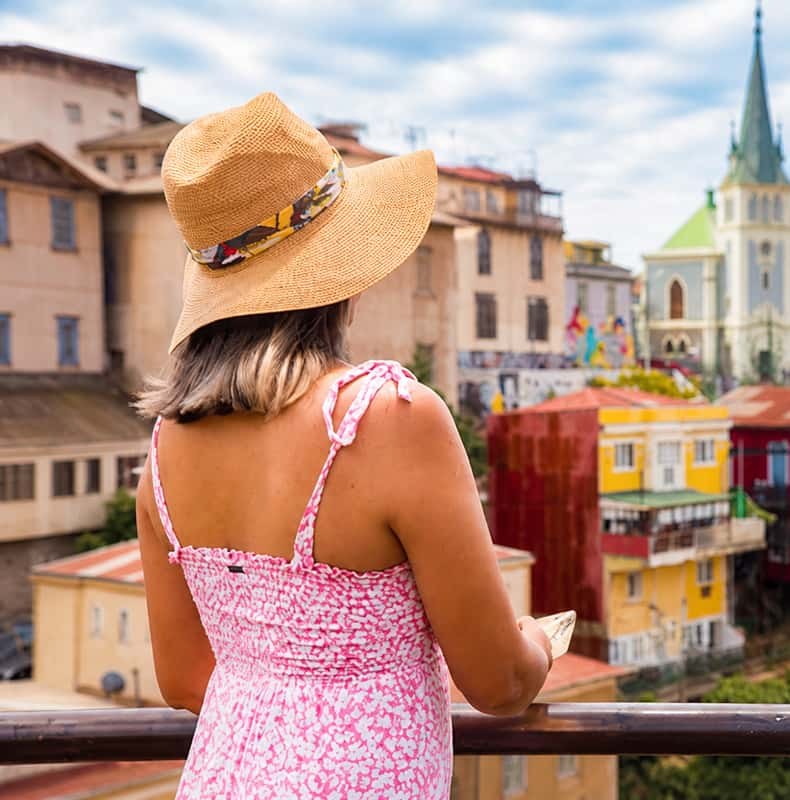
Santiago: Valparaiso, Viña del Mar & Casablanca Wine Tour
A small-group day from Santiago with a funicular ride and a Casablanca tasting included.
From $60 per person
Check Availability
Valpo in 1 day: Authentic + Famous! Semi-private walking tour & public transport
Seven hours on trains, trolleybuses and funiculars, through the markets and over both cerros.
From $80 per person
Check Availability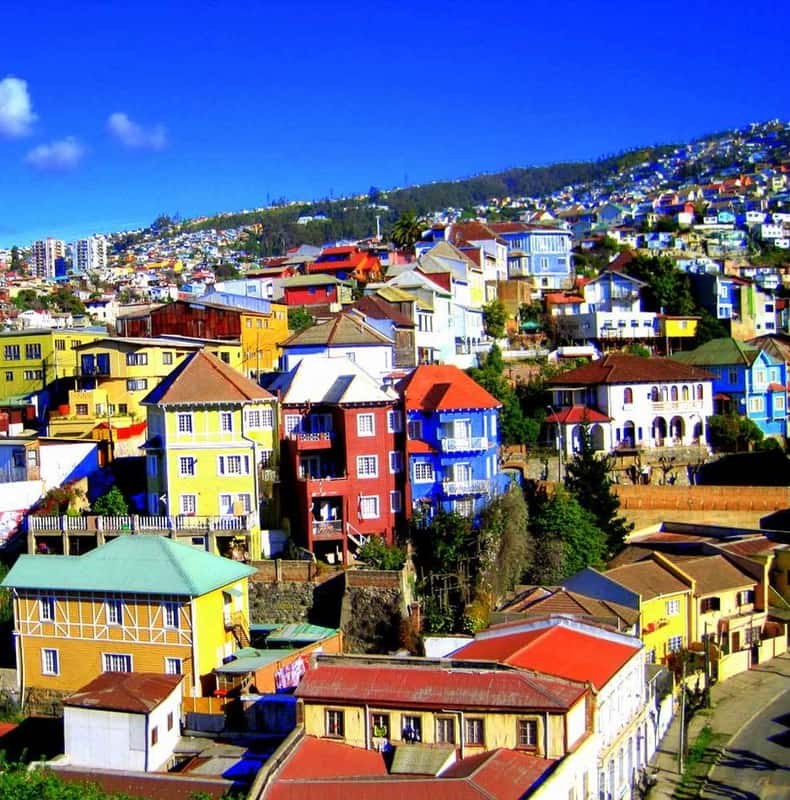
Santiago: Valparaiso, Viña del Mar, & Casablanca Valley Tour
The most-reviewed day trip here: Viña, Valparaiso, a cable car and a Casablanca tasting.
From $72 per person
Check Availability