Photographing Valparaiso: Where to Shoot and When
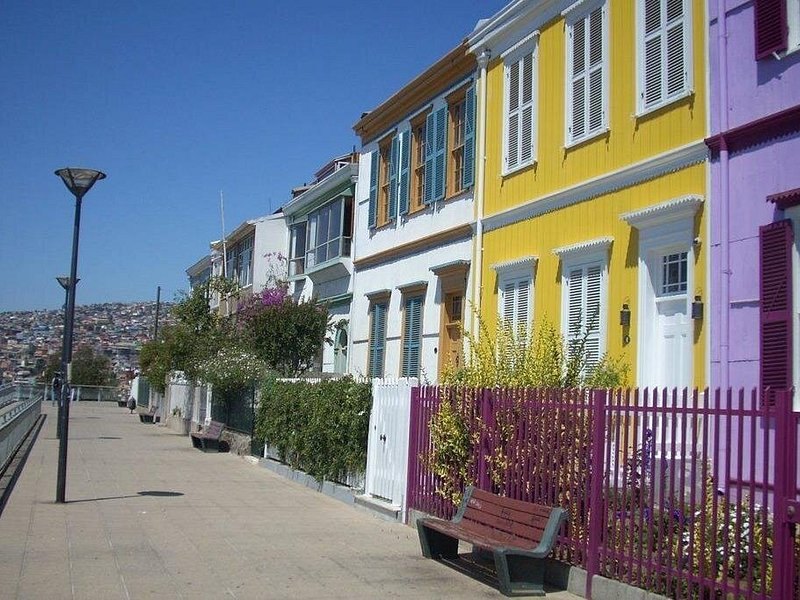
The short answer. Valparaiso faces roughly west across its bay, so the painted house fronts take the sun late in the afternoon and the water goes flat and hard at noon. Shoot the port and the markets in the morning, the cerros and the paseos in the last two hours of light, and use the funiculars to move between them rather than arriving at the top out of breath and out of time.
This is a city people photograph badly, and the reason is almost always timing rather than technique. The colours that pull everyone here need low light across them; at midday the same walls go chalky and the bay behind them turns to glare. Here is where to stand and when. Every guided route that gets you there is compared with city tour valparaiso chile.
Why does the light matter so much here?
Because the city is a west-facing amphitheatre. The hills stack up behind a narrow flat strip, every painted facade looks out across the water, and the sun sets into that water. In the morning the house fronts are in their own shadow; by late afternoon the whole slope is lit from the front.
The bay does the opposite. Early, it has texture and working boats; at noon it is a flat silver sheet. So the day has a natural order: water first, walls last.
Where should you shoot, and when?
| Where | Best hour | What you get |
|---|---|---|
| Caleta Portales | Early morning | Fishing boats landing, pelicans on the rail, sea lions on the slipway |
| Mercado El Cardonal | Mid-morning | Produce, faces at work, the upstairs kitchens |
| Muelle Prat and the launches | Late morning | The painted hills from the water, which is the one view the streets cannot give |
| Paseo Gervasoni and Atkinson | Mid to late afternoon | The classic stacked-houses frame with the bay behind |
| Paseo Yugoslavo | Late afternoon | Palacio Baburizza and the drop to the port |
| Museo a Cielo Abierto | Overcast or shaded hours | Murals without blown highlights or hard shadows across them |
| Paseo 21 de Mayo | The last hour | The whole bay and the container terminal, backlit |
The murals are the exception to the golden-hour rule. Flat, overcast light is kinder to painted walls than raking sun, which throws the texture of the render into every frame. A grey day in Valparaiso is a street-art day.
What about the funiculars themselves?
They are the hardest thing here to photograph well, because the interesting view is from inside a moving wooden box through a scratched window. Two frames work: the car from below on its incline with the houses stacked behind it, and the machinery and the ticket window at the upper station, which are unchanged in a way the streets are not.
Ascensor Reina Victoria and Ascensor El Peral, both built in 1902, are the pair the walking tours ride, and they run from 7am to 9:30pm. Things to do lists which lifts are currently working.
Ride up, walk down. You will shoot better if you arrive at the top with your breath and your patience intact, which is the argument for the guided Valparaiso tours that include the lift tickets.
How do you photograph people here without being rude?
Ask, and buy something. The street artists on Cerro Alegre and Cerro Concepción sell prints, and several travellers describe being introduced to the painter of a wall they had just photographed. A guide who knows the artists turns a furtive frame into an introduction.
At the markets and the fish pier the same rule applies, more so. These are people at work, early, and a camera in the face is an intrusion. Wide frames of the whole quay are fine; the close portrait needs a word first.
What should you carry?
- One wide lens for the paseos, where you cannot step back far enough.
- Something long for the port: the cranes and the ships compress well from the hills.
- A bag that closes, worn in front on the stairways between hills.
- Shoes with grip, because you will be walking backwards looking through a viewfinder on worn cobbles.
- A windproof layer for the last hour of light, when the sea breeze is up and you are standing still on a paseo.
Is it safe to walk around with a camera?
In the busy quarter in daylight, yes, and that is where almost every frame worth having is. The stairways between hills are where to put the camera away: they empty fast and they are the one place the advice is consistent from everybody who lives here.
After dark, the blue hour over the bay from a paseo is worth having, and the way to get it is to be up there before the light goes and take a taxi down afterwards. On a first visit, do that part with a guide. The visiting page has the rest of the practical advice.
What is the one frame everybody gets wrong?
The wide shot of the whole amphitheatre from a paseo. It looks spectacular to the eye and flat in a photograph, because the hills compress into a mush of small coloured rectangles with nothing for the eye to land on.
The fix is foreground. Shoot it through the railing of Paseo Atkinson, or with the top of a funicular car in the bottom of the frame, or from inside one of the covered walkways so the opening frames the bay. A long lens and one bank of houses beats the whole city every time.
Where do you shoot the port from?
Paseo 21 de Mayo on Cerro Artillería, above the port mouth, with the container terminal and the cranes laid out below you and the ships coming in past the breakwater. It is the working half of this city, and it photographs better than the painted half in hard light.
The second option is from the water. The launches out of Muelle Prat put you among the moored ships and give you the hills as they were meant to be seen, from the sea they were built to face. Things to do explains how to find them.
Which month has the best light?
March and November, at the two edges of the dry season. Both have long, low afternoon light, under 6 mm of rain, and none of the summer haze that sits over the bay in January. June and July give you dramatic skies and 162 mm and 89 mm of rain respectively, which is a real trade rather than a bad one.
If you are choosing dates around the weather rather than around the light, the month-by-month page sets out the numbers.
The light waits for nobody. The three below get you onto the paseos with the lifts doing the climbing, so you arrive while the sun is still on the walls; the rest are on Valparaiso Tours.
Tours that reach the good light
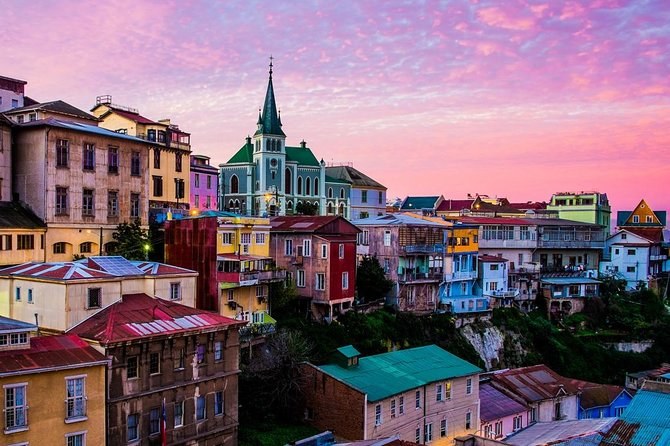
Famous Valparaíso! Premium Walking Tour with a Native Guide
Three hours on foot through the UNESCO quarter, both funicular tickets in the fare.
From $40 per person
Check Availability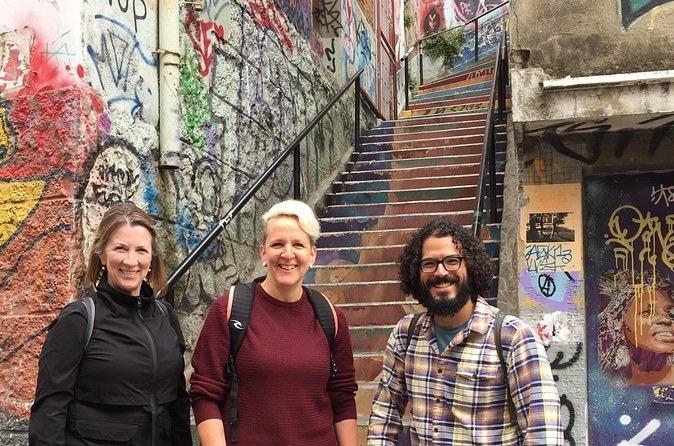
Guided Panoramic Tour in Valparaíso
The lifts rather than the stairs: three and a half hours, and step-free by its operator.
From $40 per person
Check Availability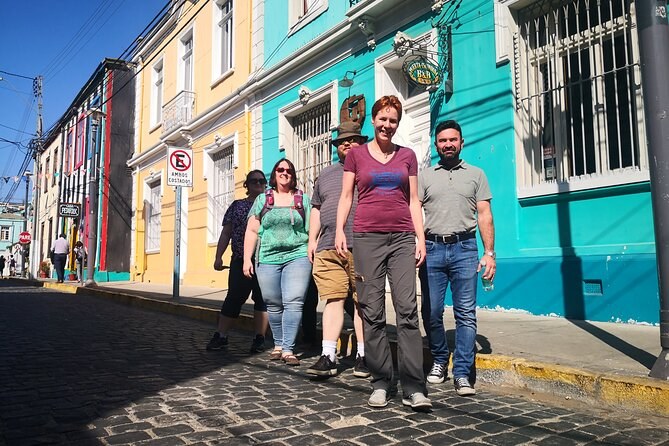
Private tour in Valparaiso from Valparaiso CruiseTerminal to Stgo
A private guide-driver from the cruise terminal to Santiago, two and a half hours in the city.
From $284 per person
Check Availability